What it is
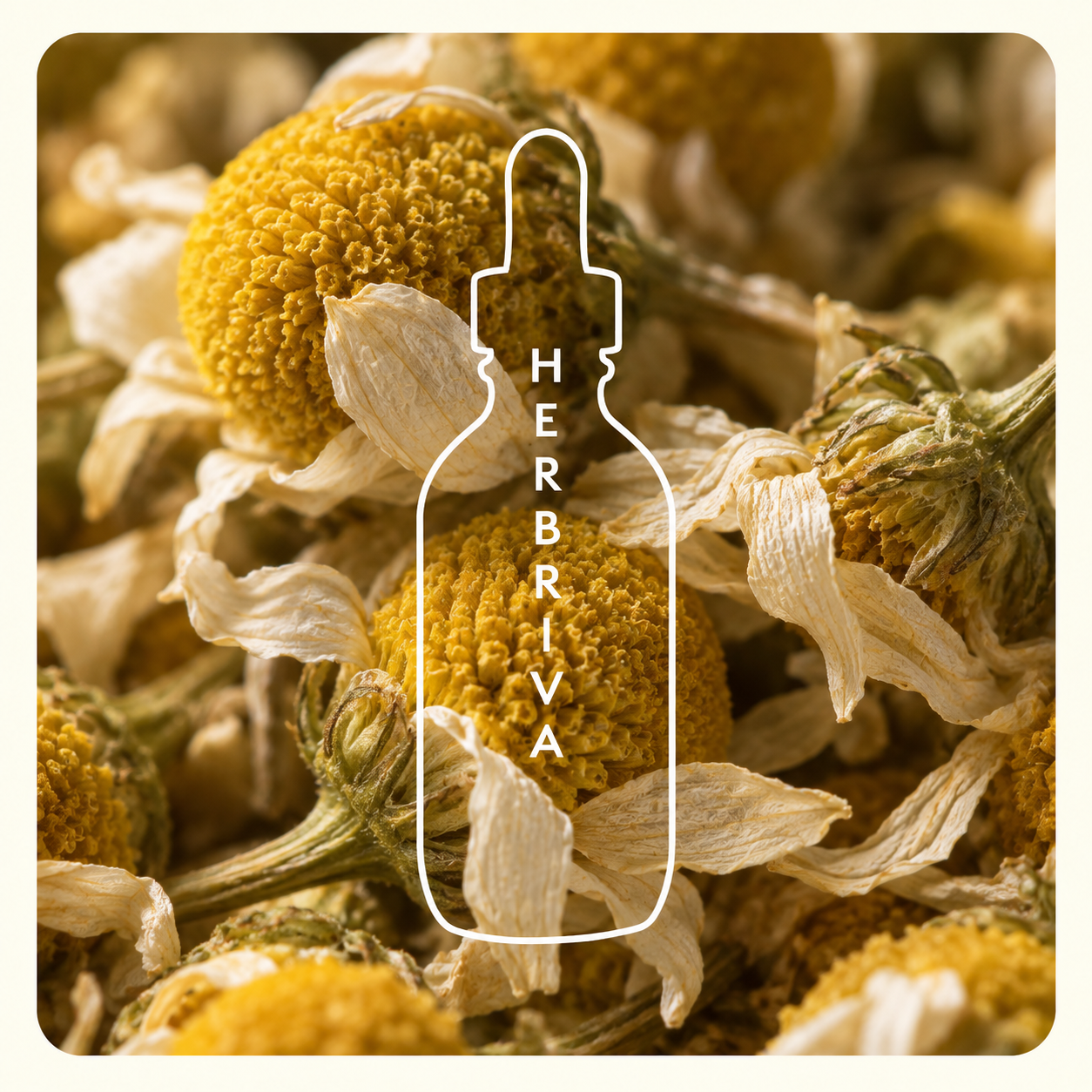
Two different plants are sold as chamomile and they are not closely related. German chamomile is Matricaria chamomilla; Roman chamomile is Chamaemelum nobile, a separate genus. In a field they look much alike — white ray florets around a raised yellow disc, about thirty centimetres tall — and they behave quite differently once distilled.
This is the German one. The disc is more domed, the plant is an annual, and the oil it yields is deep ink blue. That colour is not in the living flower: it forms during distillation, out of a precursor the plant carries, which is why a fresh chamomile field looks nothing like a bottle of its oil.
Almost everything else on these pages is Chinese, or has been in China long enough to have a story here. This one is not and has not. It is on this list because it is in the bar.
Terroir
The ground it grows on
Fayoum and Beni Suef, on the Nile south of Cairo — alluvial soil, a long dry growing season, and a wide gap between day and night temperature.
Read note ↗Processing
From field to jar
Picked by hand from February to May, at full open. Then sun-drying to under ten percent moisture, which is the number the whole trade is written around.
Read note ↗Grading
How it was judged
Whole-flower percentage, stem content, colour, and the oil figure. The first two are about how carefully it was picked, not how well it grew.
Read note ↗In the tradition
Not the Chinese one. Chamomile has no standing in classical Chinese herbal practice and it would be dishonest to give it one — the Chinese flowers that sound like it, the four famous chrysanthemums, are a different genus and a different material altogether.
Its history sits further west. Egyptian practice held it in high regard and dedicated it to the sun; later European writers called it the plant's physician, on the belief that it improved whatever grew beside it. It was a standing fixture in monastery and household gardens through the seventeenth century, and it has been used in shampoo for a long time, particularly for fair hair.
What's in it
Contains chamazulene, alpha-bisabolol, and bisabolol oxides.
This page describes a plant and its place in herbal tradition. It is not a description of what our products do, and nothing here is medical advice.